Science Week in Action: Dry Ice, Dissections and Detective Work
Science week at St Mary's is always a great opportunity to push the boundaries of learning. From a challenging science quiz and a week-long display of excellent science reads in the LRC, to fun, intriguing, hands-on practicals every day, the week was designed to ignite curiosity and encourage critical thinking.
These enriching, extra-curricular activities are in addition to the normal timetable, and appeal to exploratory and investigative minds. A truly remarkable school experience is one that creates lasting memories and inspires future careers, and this year's Science Week certainly did that.
Monday
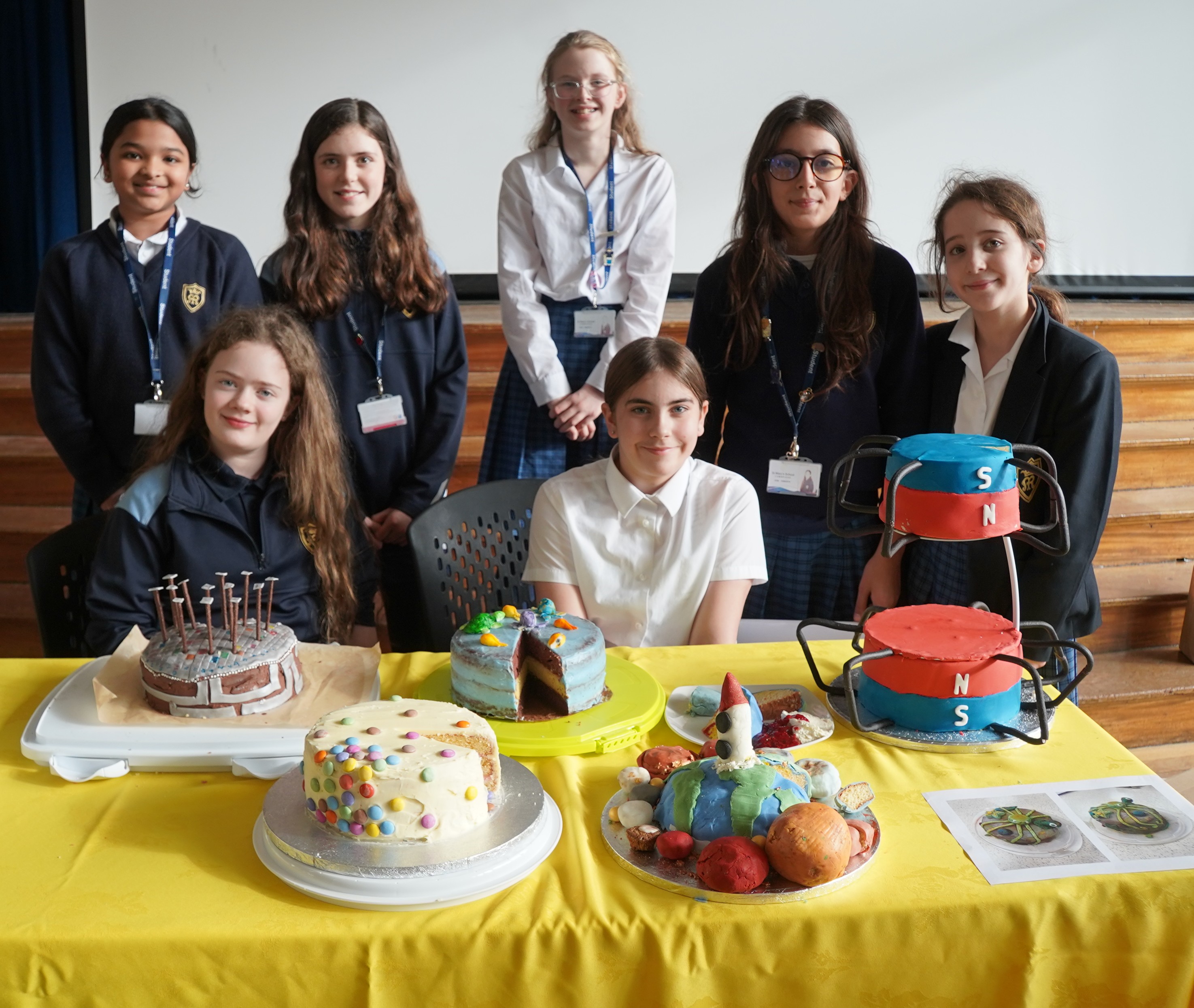
| Science week at St Mary's began by blending curiosity with creativity as students using baking as a canvas to illustrate different areas of science. With prizes available for the usual attributes of a good bake, competition was also fierce for imagination, scientific inspiration and research. Every cake, in themselves edible chemistry experiments, told a different narrative which had been researched and presented by the students to the rest of their STEM-inspired peers. From nuclear energy to the orbit of the planets, and diffusion to bioluminescence, even magnetism became the focus of a visually stunning and tasty creation. |
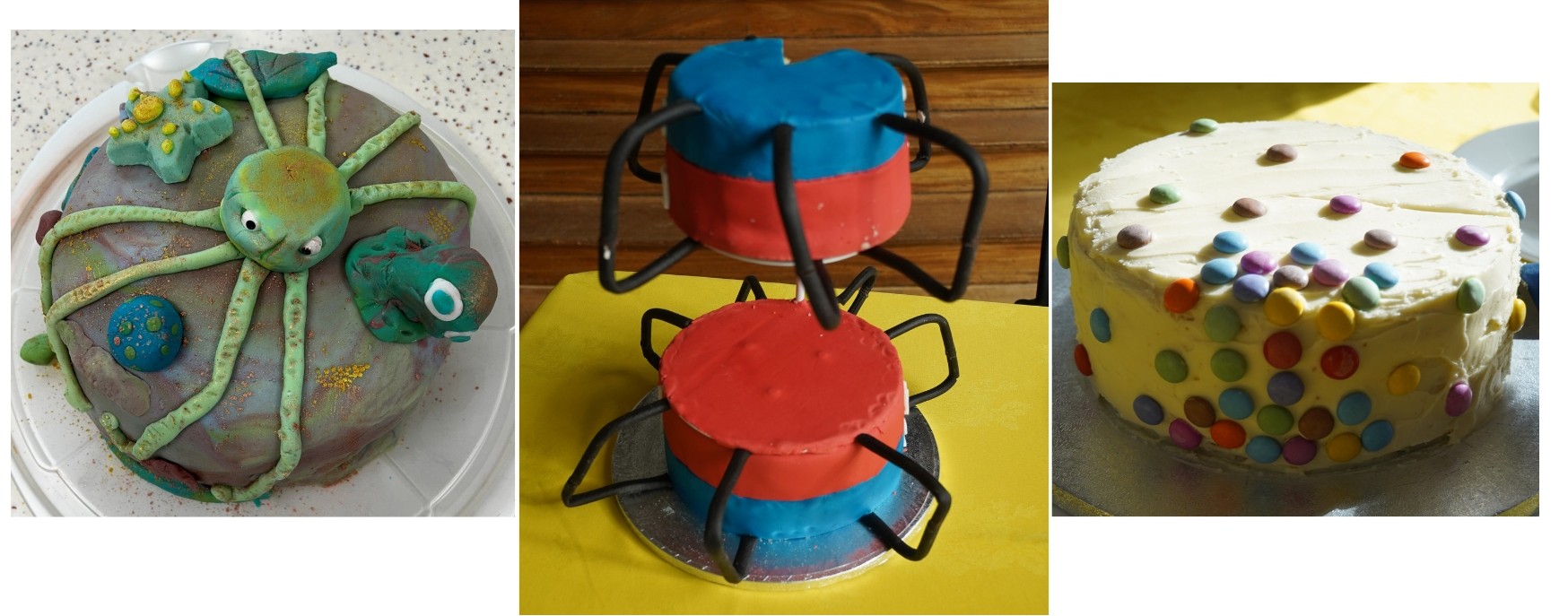
The judging was intense. There was appreciation for the popping candy hidden inside the nuclear reactor, for the cascade of Smarties let loose in a simulation of diffusion, and admiration for the rocket cake, accompanied by thorough scientific research and presentation. Coincidence maybe, but the marine biology cake was very moist!
Tuesday
Lemons were the focus of our Science Week Tuesday, and it wasn't even Shrove Tuesday! Students were taking part in the fruit battery challenge, lighting up LEDs using the power of juice.
The phrase 'has that battery got any juice' is idiomatic rather than literal, although the acidic juice in a lemon can act as an electrolyte, allowing charged particles to move through it. Students connected lemons in series using two different metals, magnesium and copper, as the anode and cathode. Getting the LEDs in their circuits to emit light proved tricky, but the students were quick to add more lemons, and to try out apples, limes and oranges too, to produce enough voltage.
.jpg)
Sixth Formers, including the STEM scholars, volunteered to help plug in lemons and troubleshoot.
Wednesday
Although dissection isn’t for everyone, ovine eyeballs were available for students who wanted to take their learning beyond the GCSE curriculum, with a hands-on opportunity to learn about the anatomy of the eye. The lenses, once removed, were tested on newsprint to see how the convex shape acts like a magnifying glass.
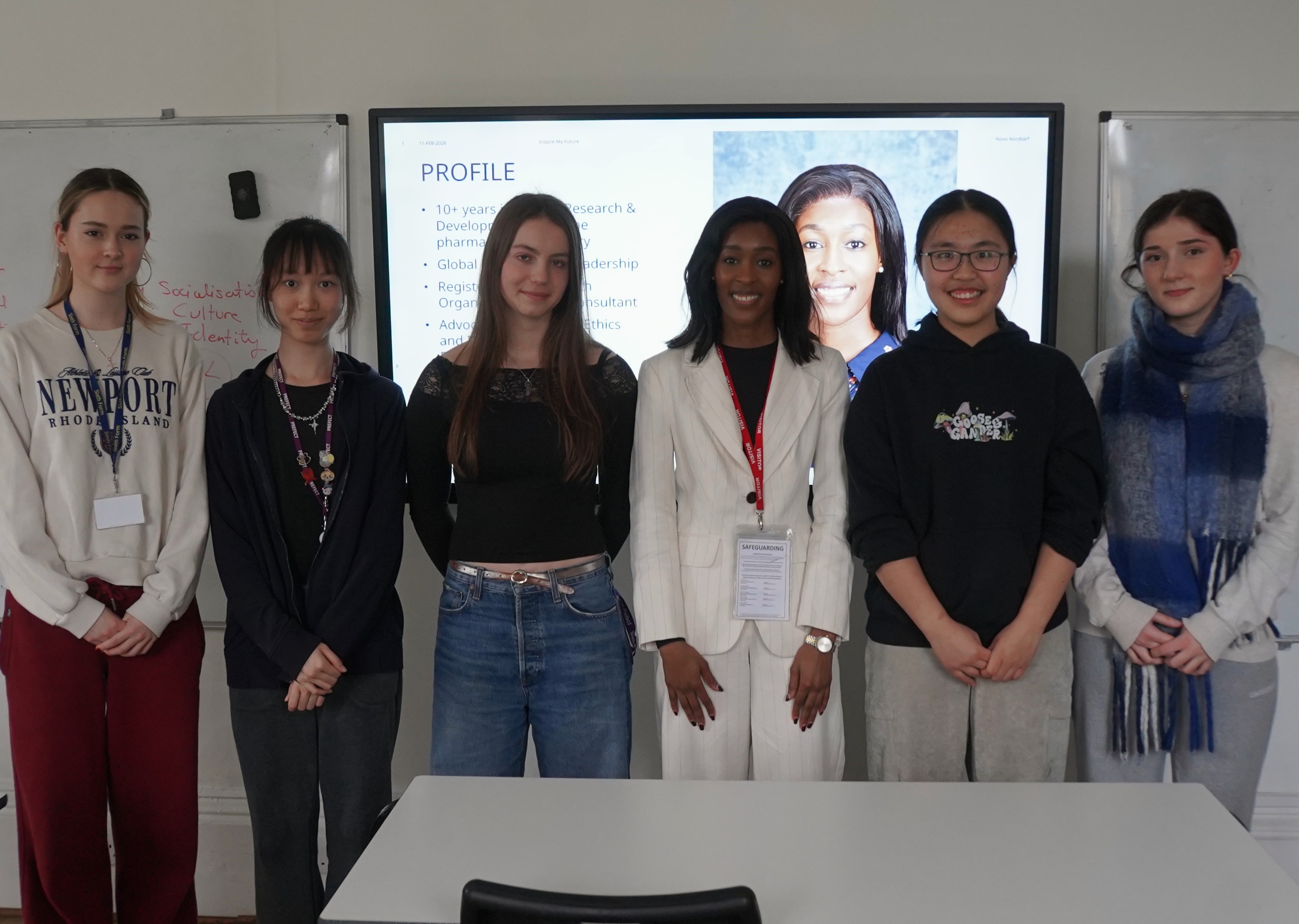
| Wednesday was International Day of Women and Girls in Science. We were delighted to welcome in one of our parents to give a fascinating talk about her work in the pharmaceutical industry. Her experiences range from what it is like to work on the world's most expensive drug, to the processes needed to get a drug "from bench to bedside". These talks are a regular feature at the Sixth Form, with inspiring role models sharing insights and guidance on future careers and industries with students in Years 10 to 13. |
Thursday
How to make slime was a popular practical led by two of our enthusiastic Year 12 Stem Scholars, because: "We really enjoy seeing people having fun and engaging with science." And also, maybe, because one of them wasn't allowed to make slime at home when they were younger, for fear of the carpet.
The recipe, for those with no carpets at home:
120ml glue: 180g shaving foam: 1/2 tsp baking powder: 2 tbsp contact lens solution: 1 tsp food colouring.
And here are the results:
Apart from being a good opportunity to squidge some gooey slime, there was an important lesson in measurement and ratios, (see the ones that 'didn't quite go to plan') and observation of changes in states of matter.
.jpg)
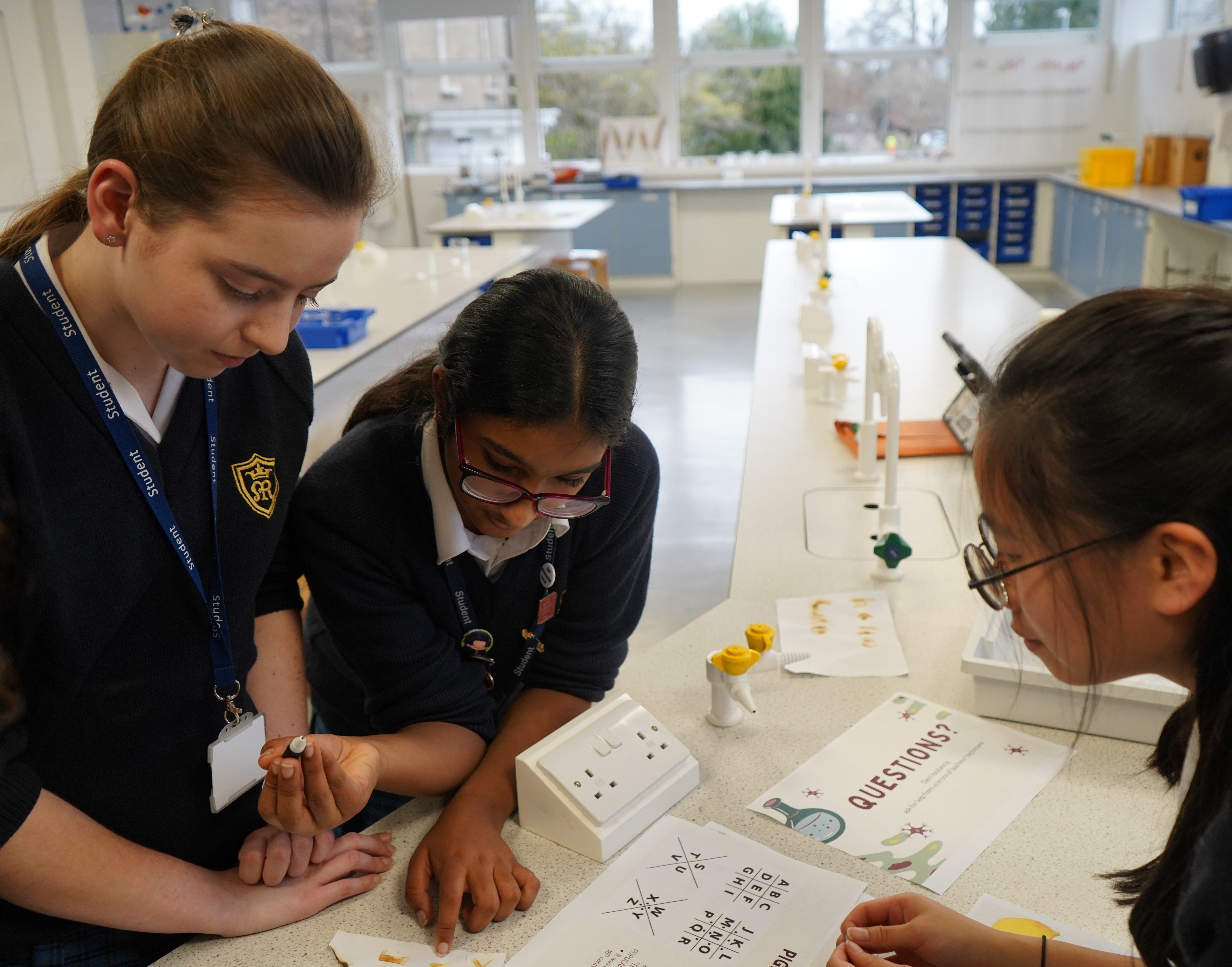
| In a next-door lab, forensic science was under way to find the culprit guilty of 'pinching school property'. Secret notes written in lemon juice were exposed, their encoded messages deciphered, and fingerprints taken for analysis. Footprints were recovered from the scene, along with clothing fibres which were closely examined under a microscope. |
Friday
Who knew that 'Boo bubbles' could be such fun? Friday was dry ice day, with lots of hugely entertaining and fascinating demonstrations of the behaviour of frozen carbon dioxide. The students correctly identified the process of sublimation, watching the gas being captured, with a simple soap and water solution, into bubbles. With everyone knowing that CO2 is colourless, the question was raised -why are the Boo bubbles cloudy?
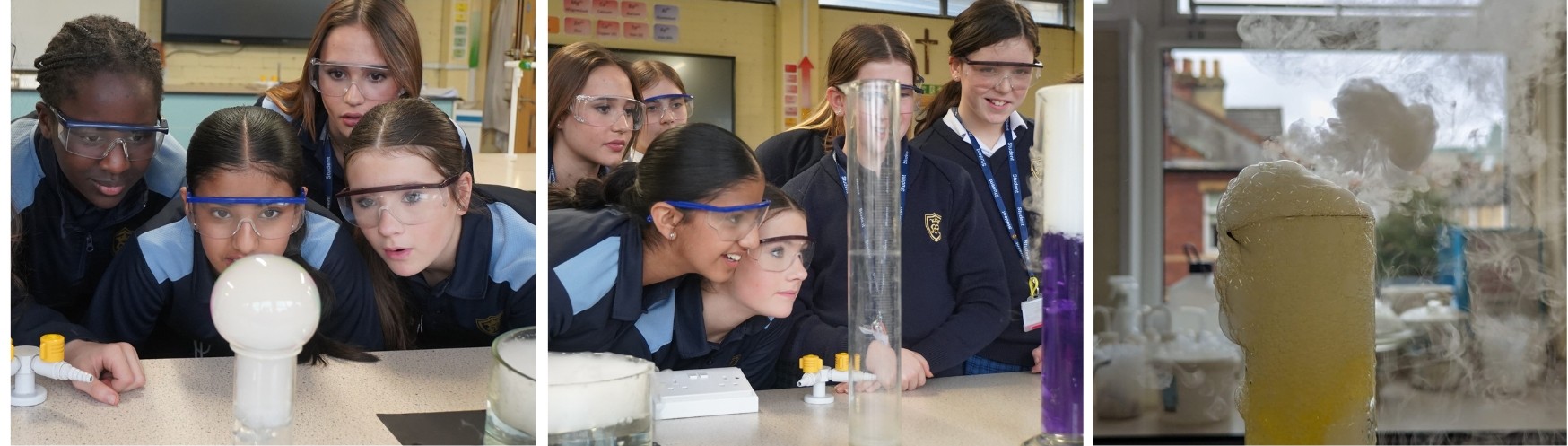
Dropping dry ice into a cylinder full of an alkaline solution, coloured purple/violet by a few drops of universal indicator, caused an interesting result, aside of the vigorous bubbling. The colour of the solution gradually changed colour through green and then red as the ensuing reaction changed the solution acidic.
In a week designed to spark interest in STEM subjects, promote hands-on learning and highlight the real-world relevance of science, fun was also an essential part of the equation.
Sincere thanks go to the teachers and staff whose dedication brought this festival of science to life, and to our students, whose natural enthusiasm made every day a memorable one.
February 2026